
 |
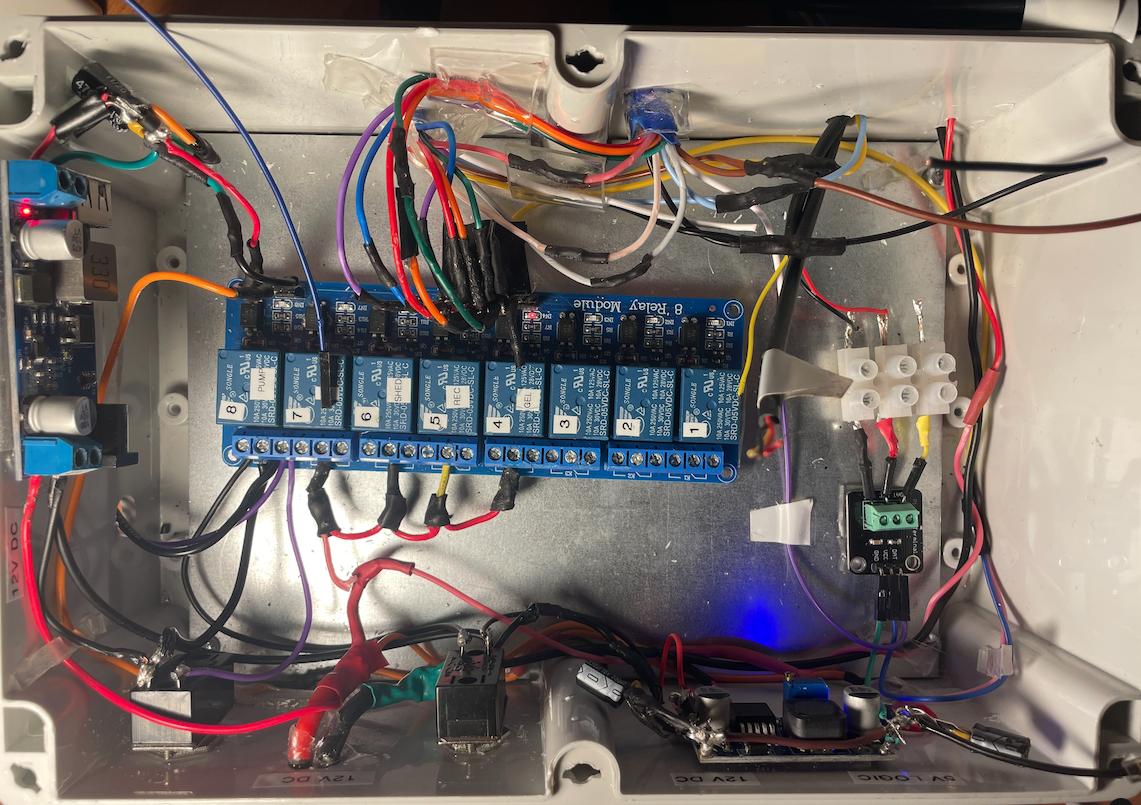 |
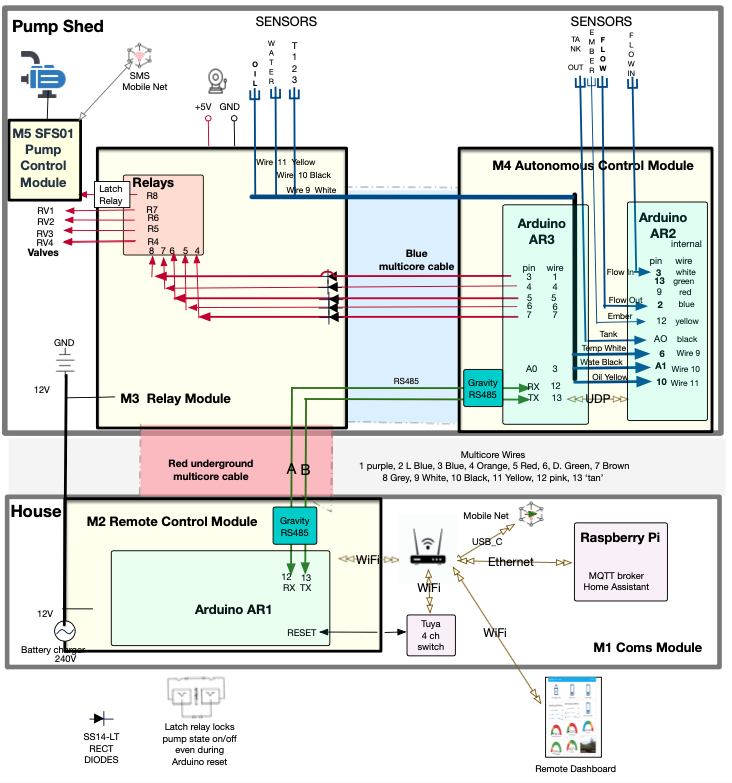
Module 3: Relay Module represents the relay control hardware, physically located in the pump shed. This module contains the actual relay board with appropriate power supplies, relay R8 which passes the pump-control signal on to the SFS01 pump controller, and four peripheral relay outputs for valve control. It includes a manual disconnect switch that allows the pump to be isolated during maintenance, and a buzzer that can substitute for actual pump operation during testing. The temperature sensors, though physically distributed around the property, have their connection points in this module, with signals combined onto a single wire before being routed to Module 4. This centralization of relay hardware in a dedicated module simplifies wiring, improves troubleshooting, and provides a clear physical demarcation between control logic and high-current switching.
Pump latch relay (note, 9 October 2026): the pump latching relay is a low-current signal relay located in Module 4 beside AR3. Its job is to hold the pump-state signal steady through an AR3 reset. AR3 pulses its coils; its held output travels on blue multicore core 1 to relay R8 in Module 3, which passes the signal to SFS01 wire 1 via the manual isolation switch. The SFS01 box then drives the high-current automotive starter relay (via its wire 2) that energises the starter solenoid. On the diagram, AR3 pin 3 (with pin 2) pulses the latch relay, and its held output runs on multicore wire 1 to R8. Multicore core allocations are listed in Appendix 11A: Arduino Pin Allocations.
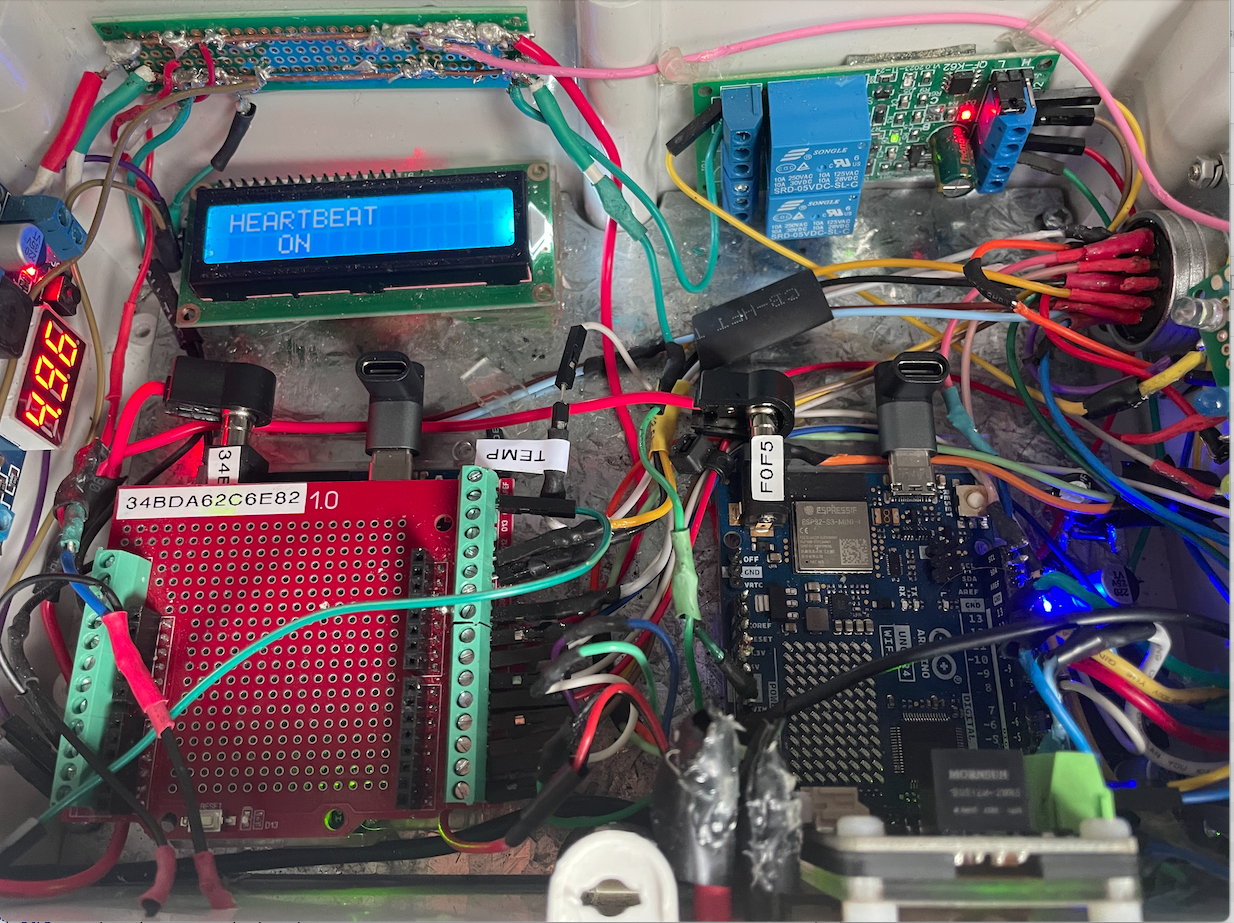 |
Module 4: Autonomous Control Module, the intelligent control and sensor hub, contains two Arduino microcontrollers working in concert. It also houses the latching signal relay, pulsed by AR3, which holds the pump-control state steady through any Arduino reset and drives relay R8 in Module 3. Arduino AR2 operates as a WiFi access point and functions as the sensor aggregation hub, reading all physical sensors at high frequency and broadcasting this data via UDP. Arduino AR3 connects to AR2's WiFi network as a client, receives the sensor broadcasts, implements the autonomous fire defence algorithms, and manages RS-485 communication back to the house. This separation of sensor acquisition from control logic allows each Arduino to focus on its specific task, prevents sensor reading delays from interfering with communication protocols, and enables the system to continue gathering sensor data even if control logic experiences issues.
.
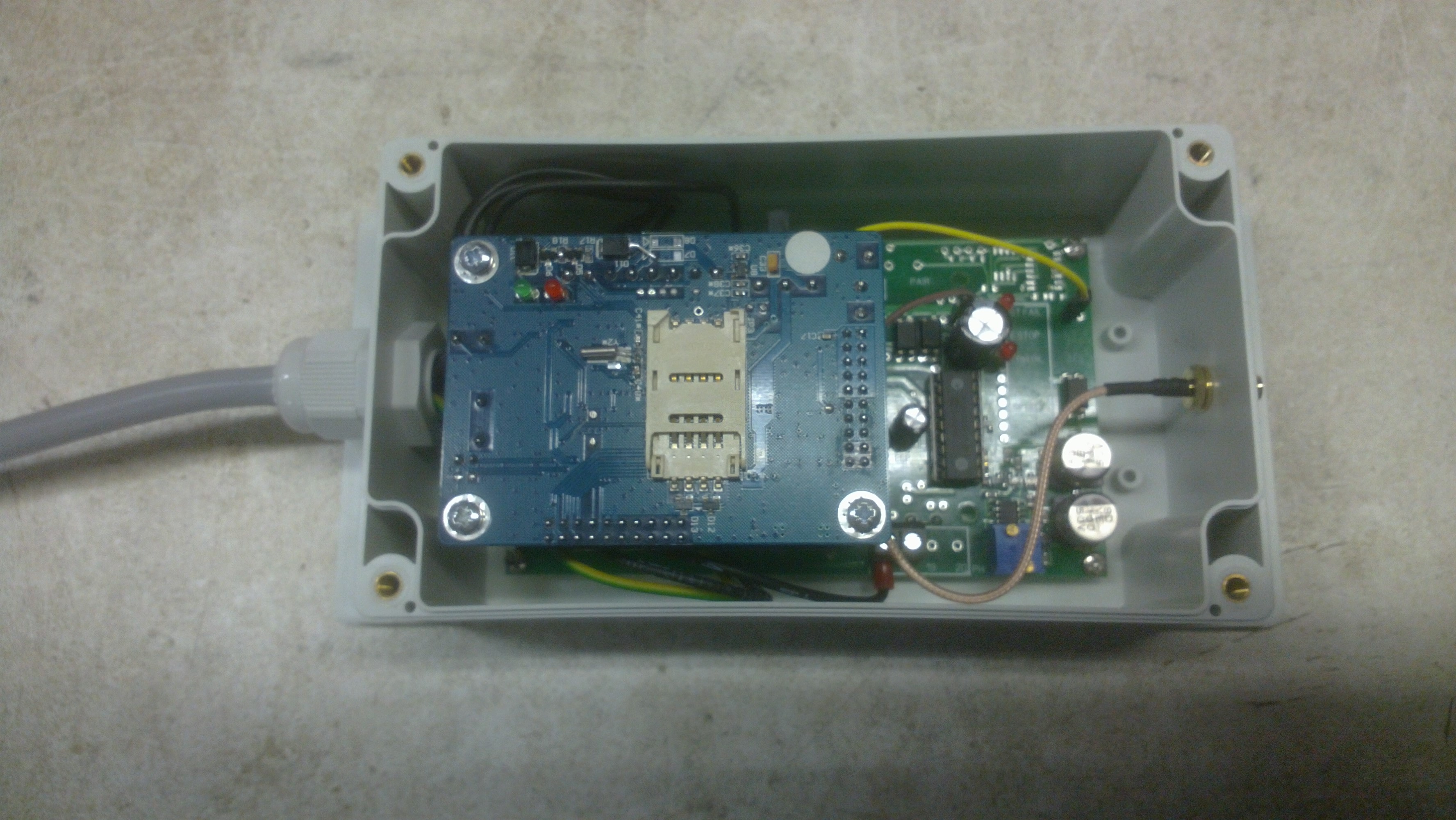 |
Module 5: Pump Control Module consists of the Small Farm Systems SFS01 commercial pump controller, a dedicated unit responsible solely for managing the diesel pump motor. This controller receives input from both Arduino AR3 via a relay connection and from SMS commands over the mobile network. The dual control paths ensure that the pump can be commanded even if the local control system experiences complete failure, while the commercial nature of this controller provides tested, reliable pump management including safety interlocks and protection against improper operation. In the event that the pump does not start on a START command to this module, it retries after 20 sec, repeating the attempt up to 5 times. (A STOP failure is treated similarly in the ARMAC AR1 coding itself).
For more background and technical detail refer to Electronics and Control Systems, House-based Electronics Control Sub-system.
<< The Electronic Control Sub-System | | Communication Protocols >> |Table of Contents>