
 |
The choice of pipe materials and connection methods reflects the conflicting demands of cost, fire resistance, ease of installation, and long-term reliability. Three material systems are employed in ARMAC based on location and function.
Underground Distribution - The 100-meter feeder pipe uses DN50 (63mm OD) blue-line high-pressure polypipe, specifically the metric blue-line variant rated for higher pressures than standard green-line rural pipe. While less fire-resistant than metal, adequate burial depth (generally 250-350mm, exceeding the 100mm minimum specified by CSIRO research) provides protection against radiant heat from burning surface vegetation. The pipe's external diameter of 63mm accommodates saddle clamp fittings without requiring pipe cutting, enabling branch connections to risers while maintaining pressure integrity of the main run.
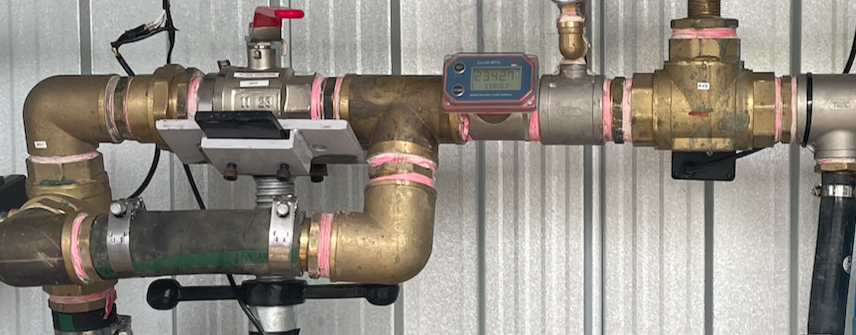
Above-Ground Control and Risers - All above-ground piping in the pump shed and all sprinkler risers use copper pipe exclusively, despite higher material cost and more labor-intensive installation. Copper provides indefinite service life, excellent fire resistance, and pressure capability far exceeding system requirements. The control system employs DN50 (2-inch nominal) copper pipe for the main header, DN20 (¾-inch) for reduced-flow and recirculation branches, and DN12 for shed cooling lines. Sprinkler risers use DN20 for high-flow sprinklers and DN15 for lower-flow units.
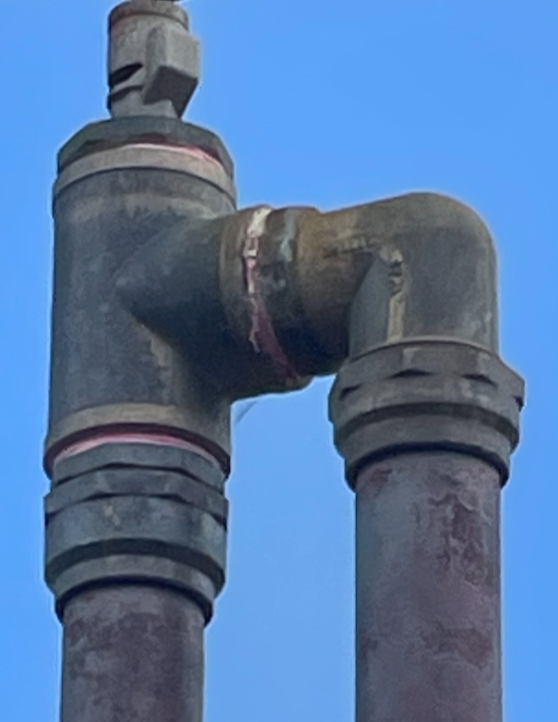 |
Connection Methods - After evaluating brazing, press fittings (Kempress or B-Press systems), compression fittings with copper olives, and flared compression fittings, the final implementation primarily employs flared fittings for reasons of fire resistance, cost, and maintainability. While press fittings would have simplified assembly, their internal silicone sealing olives pose fire vulnerability, and fire-rated variants command significantly higher prices. Brazing, while creating permanent joints, eliminates future disassembly for maintenance or modification. Flared fittings using brass bodies and copper pipe flared with a flaring block and pin provide excellent pressure capability, fire resistance (no elastomer seals), and the ability to disassemble connections when needed. The DN50 copper pipe ends were annealed with a MAP gas torch before flaring to prevent work-hardening cracks. For a few selected DN15 locations, standard compression fittings with copper olive inserts were used to supplement the flared connections. Teflon tape combined with teflon paste were used to secure the BSP thread screw connections.
Hoses and Flexible Connections - Short flexible sections use fire-rated reinforced silicone hose (maximum operating temperature 260°C) rather than standard rubber hoses that would fail under radiant heat exposure. The 400mm connection from the pump exhaust to the shed wall penetration uses DN40 high-temperature silicone, while the pump inlet uses DN50 silicone wire-reinforced hose with appropriate sleeve fittings. Standard rubber garden hose was explicitly avoided anywhere exposed to potential fire conditions.
For more background and technical detail refer to Pipe connection method, Pipe Supports, Feeder pipe.
<< Sensor Integration cont | | The Gel Injection System >> |Table of Contents>