
How the sprinkler layout and the pipework came to be as they are. The present arrangement is described in Sprinklers and pipework.
The sprinkler layout
The layout began with a VYRSA-60 at position 2. It would have needed to be 3.6 m above ground, and the far bedroom wall would still have required supplementary spray, so the single VYRSA-60 was replaced with two Pope sprinklers (2a and 2b), which do an excellent job at their minimum operating pressure of 36 PSI.
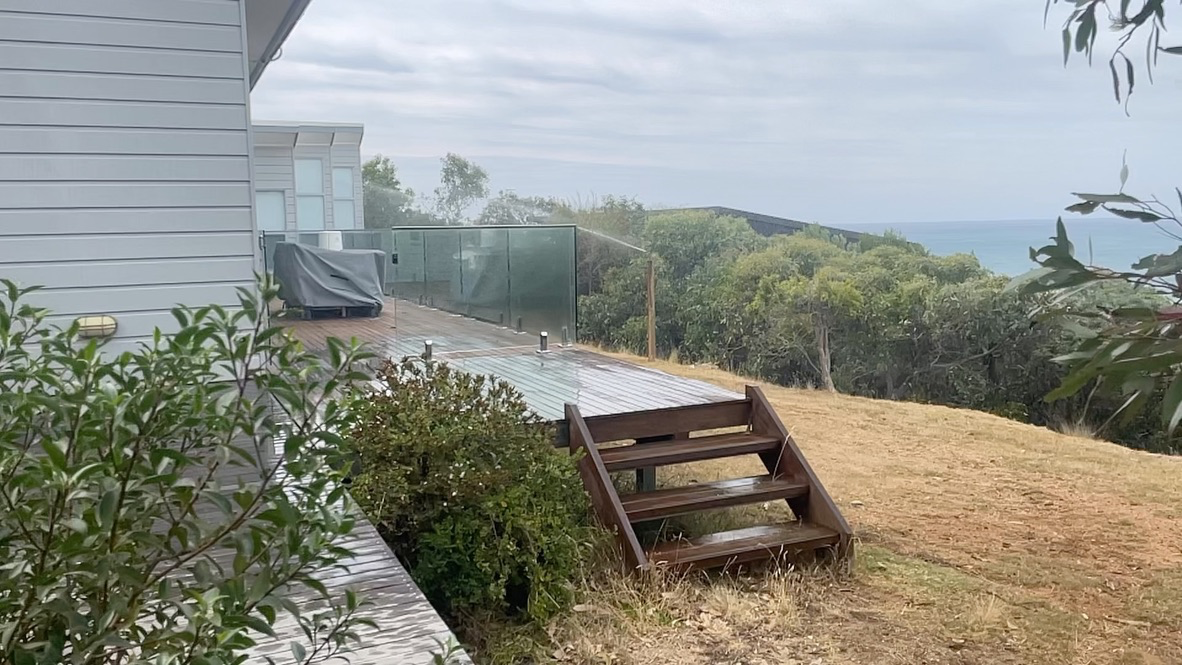
Sprinkler 1 at the west steps:
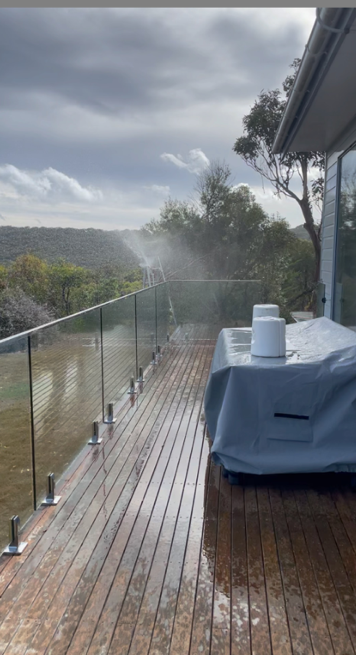
The count has since grown to 13 sprinklers: 3 VYRSA-60 and 10 Popes (November 2026).
Choosing a pipe connection method
There are of course various choices for connecting up a plumbing system. Obvious choices are brazing, press fittings, brass compression fittings using copper olive inserts, or the more old fashioned brass flared compression fittings.
The cheapest approach is to use flared copper compression fittings, and these can often serve in place of barrel unions to allow pipe sections to be removed for maintenance.
It is possible to use Kempress press fittings from Plumbingsales.com.au, cheaper than the B-Press fittings available from Reece (even at trade rates). Appropriate press tools such as the Rothenberger 4000 B-Press Tool kit can be hired from Reece (Torquay) for $100 a day, or an equivalent from Kennards (Geelong) for a little less. The Kempress fittings can be fixed with any of the major available press tools. They are however more vulnerable to heat because of their inner silicone sealing olive. Fire rated fittings are available but at a considerably more elevated price.
Ultimately, for reasons of availability, flame resilience, and cost (but not necessarily ease of construction), flared fittings were used in most situations, with an occasional use of a copper olive insert compression fitting where it was cost effective and appropriate.
Choosing the feeder pipe
Although greenline (rural) polypipe would probably have coped with the pressures involved, the desirability of robust piping for what will be an intermittently tested but critical system led to the decision to use the much more robust (metric) blue-line pipe and fittings, and the friction figures settled on 63 mm pipe (see Water Infrastructure: tank, pump and feeder pipe). The calculations showed that even 50 mm blue-line would have delivered adequate pressure at every sprinkler; 63 mm was used out of an abundance of engineering caution.
<< Development history: the water system | | Development history: power >> |Table of Contents>